A research robot can begin as a lab tool and end as a paid inspection service, a software product, or a machine sold to other labs. The hard part is choosing one paying job before the hardware grows too costly to build and support.
For a team deciding where to take its robot next, the useful questions are practical: who pays, what task repeats, and which part of the system is hard to copy?
Quick read
- Repeated data collection can become a service with a clear price per site or test.
- A robot’s sensors, gripper, or control software may be worth more than the full machine.
- A lab prototype needs safety checks, maintenance plans, and support before a customer can depend on it.
Start with the task, not the robot
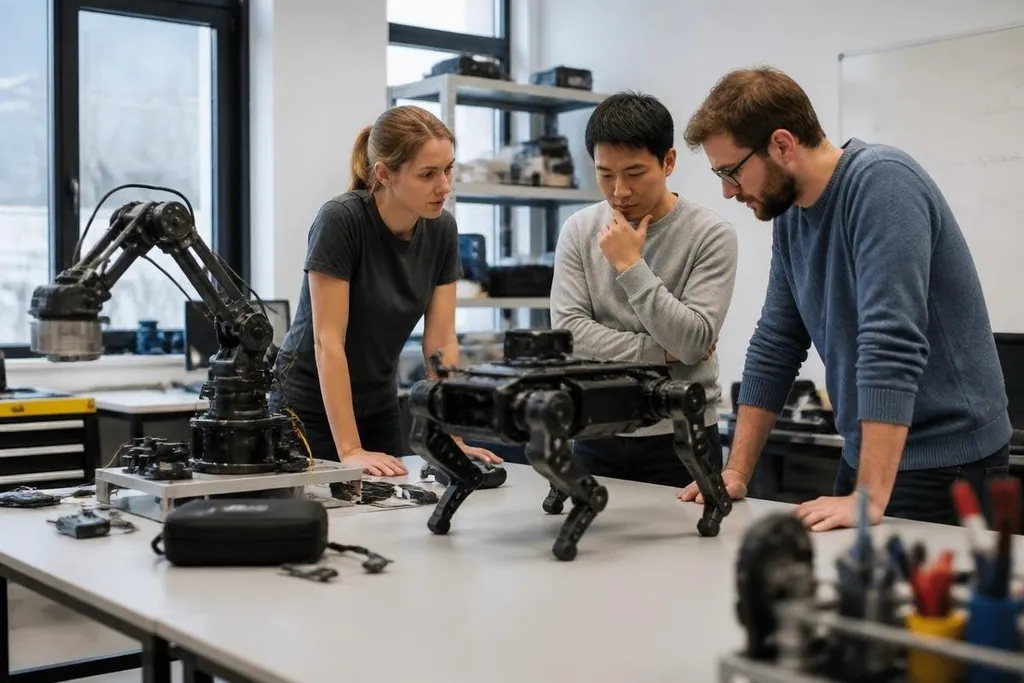
Research robots often handle jobs that are unsafe, slow, or hard to repeat by hand. A mobile robot can inspect a large indoor area, a robotic arm can repeat a lab motion, and a legged robot can gather data on uneven ground.
Each case points to a different buyer and a different way to charge. The task must be narrow enough to measure, since a customer may pay for a set of inspection images, a material test, or a completed sample run.
They are less likely to pay for “autonomy” on its own, because that word does not say what the robot will finish or how often it will work. The task also changes the design.
For indoor inspection, the system may need reliable mapping, a camera, and a battery plan. Lab work may call for repeatable arm motion, cleanable surfaces, and a way to record each run.
Five ways research robots can make money
The business path depends on what the team already has. Hardware sales suit a repeatable design, while services suit a robot that still needs people nearby.
A robot-as-a-service model charges for completed inspections, samples, or site visits instead of selling the machine. This keeps maintenance with the builder, but travel, repair time, and staff costs become part of the price.
Research contracts let a team run trials for manufacturers, universities, or public agencies. The buyer pays for a defined test, dataset, or report, while the team learns which parts of the system need work.
Component sales can cover a gripper, sensor package, actuator, or control board that other teams add to their own robots. A small part may be easier to ship and support than a complete machine.
Software licenses fit control, planning, or data tools that work across several robot designs. The team must state which sensors and hardware the software supports.
Training and support can suit robots that need careful setup. Operators, repair staff, and researchers need written procedures, plus a response plan for faults.
Each route carries a different cost. Selling a machine shifts more work to the buyer, while running a service keeps more control with the builder and adds staff, transport, and uptime duties.
A team pricing a research robot needs more than a lab result. It needs the task, staff time, service work, and customer result recorded together. Reports on Robot24 can put those facts beside the machine’s claims before the next section looks at where costs can grow.
Where the money can disappear
A lab robot may work well in a controlled test and still need major changes for paid work. Floors vary, lighting changes, objects arrive in new positions, and people share the same space.
Those conditions create costs for calibration, safety, repairs, and remote help. Data rights can shape the deal too: a customer may own the images or test results, while the robot maker keeps the software and machine logs.
Put those terms in writing before a pilot starts, especially if the robot works inside a private site. Machines moving near people need limits on speed and force, an emergency stop, clear warnings, and a way to recover after a fault.
A research team may prove that a machine can perform a task. A customer needs proof that staff can use it without guesswork.
I'd start with paid services before building a large production run. That path gives the team a chance to measure travel time, repair work, operator hours, and task success with real customers.
Use this check before seeking a large order or outside funding:
- Name one buyer and one repeated task.
- Set a price for one completed result.
- Record the human hours needed for setup and recovery.
- List the parts that fail, wear out, or need cleaning.
- State what the robot cannot do without remote help.
- Decide who owns the data, software, and repair work.
A useful first contract should test the business, not only the robot. If the customer pays for 100 completed tasks, the team can see whether the machine repeats the work often enough to cover staff time, maintenance, and the next build.
The next step for a research robot is not always a product launch. It may be a small paid service that proves one task, one price, and one support plan before anyone orders 100 machines.